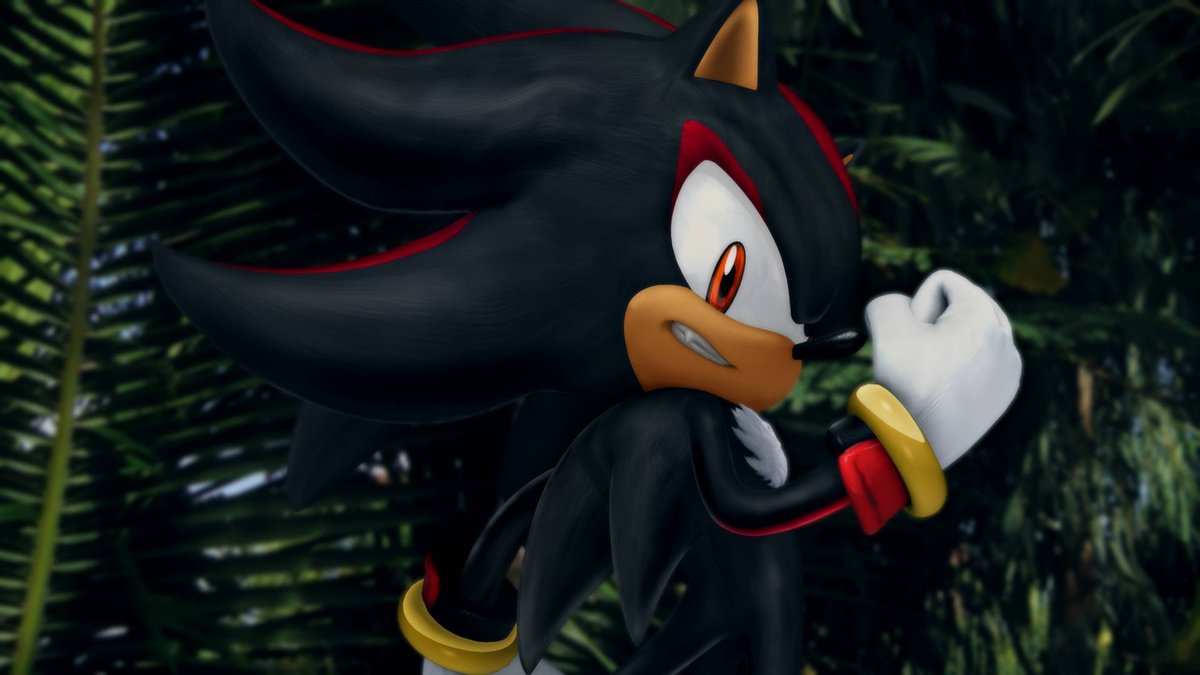
It began not with a bang, but with a whisper of a shadow—a clandestine project steeped in both desperate hope and chilling ambition. For over two decades, Shadow the Hedgehog has captivated audiences, carving out a complex, often morally ambiguous, yet undeniably significant niche in the annals of video game history. Far from being a mere palette swap or rival, The Cultural Significance & Legacy of Shadow the Hedgehog's Complex Evolution lies in his journey from a weapon of vengeance to a protector, a struggle for identity that resonates deeply with fans and challenges the very definition of heroism in the Sonic universe.
At a Glance: Why Shadow Matters
- Born of Tragedy: Created as "The Ultimate Lifeform" by Professor Gerald Robotnik to cure his granddaughter Maria, Shadow's origins are deeply rooted in loss and betrayal, setting his dark tone.
- The Anti-Hero Archetype: He shattered Sonic's black-and-white world, introducing moral ambiguity and a "means justify the ends" philosophy that redefined the series.
- A Journey of Self-Discovery: Shadow's narrative arc is dominated by a profound search for identity, purpose, and the truth of his past, making him incredibly relatable.
- Enduring Popularity: Despite his stoic demeanor, Shadow has cultivated a fierce, passionate fanbase, drawn to his power, pathos, and distinctive design.
- Cross-Media Impact: From games to comics, TV shows, and a major cinematic debut, Shadow's influence extends far beyond his initial appearances, cementing his status as a cultural icon.
Shadow's Genesis: A Tale of Dark Ambition and Tragic Hope
Long before his iconic black and red design sped across our screens, Shadow the Hedgehog was merely "Project Shadow," the brainchild of the brilliant but desperate Professor Gerald Robotnik. Over 50 years prior to his awakening, on the futuristic Space Colony ARK, Gerald embarked on a quest to create "The Ultimate Lifeform." The overt goal, publicly pushed by the United Federation president, was immortality—a weapon. The deeply personal, secret motive was to find a cure for his beloved granddaughter, Maria Robotnik, who suffered from the incurable Neuro-Immune Deficiency Syndrome (NIDS).
The name "Shadow" itself was imbued with Maria's gentle wisdom. She believed that "shadows could teach people the way to the light," a profound irony given the impossible immortality Gerald sought. This underlying duality—light and shadow, hope and despair—would define Shadow's entire existence.
Desperate for a breakthrough, Gerald made a pact with the devil, so to speak. He contacted Black Doom, the menacing leader of the Black Arms, an alien race that appears on the Black Comet every 50 years. Black Doom offered his own blood for the project, demanding the seven Chaos Emeralds in return half a century later. Gerald, secretly planning to defeat the aliens he was now collaborating with, agreed.
Before Shadow, there was a prototype: the terrifying Biolizard, an immortal but dangerously unstable creature imprisoned deep within the ARK. With Black Doom's DNA, Gerald finally succeeded in creating Shadow, designing him with elements inspired by Super Sonic's powerful form, and, crucially, secretly imbuing him with Maria's "heart and soul."
Shadow spent his early life on the ARK, forming an unbreakable bond with Maria. Gerald, meanwhile, developed the Eclipse Cannon, a weapon powered by Chaos Emeralds intended to destroy the Black Comet, a final act of betrayal against Black Doom. But secrets rarely stay buried. Project Shadow's existence was leaked to G.U.N. (Guardian Units of Nations), leading to a brutal invasion of the ARK. Maria and Shadow attempted to flee, but Maria was fatally shot while activating an escape pod, her last breath a desperate plea for Shadow to "give all the people on Earth a chance to be happy."
Shadow's pod was ejected to Earth, recovered by G.U.N., and he was placed in suspended animation on Prison Island. The grief-stricken Gerald, driven to madness by Maria's death and consumed by a desire for revenge against humanity, brainwashed Shadow, altering his memories to twist Maria's final wish into a mandate for Earth's destruction. He meticulously documented this in a diary, setting the stage for Shadow's eventual release and a horrifying plan of mass destruction. Gerald was executed, and Shadow remained sealed for nearly 50 years, a sleeping weapon awaiting activation.
The Ultimate Lifeform Unchained: His Debut and Initial Impact (Sonic Adventure 2)
Shadow's dramatic awakening in Sonic Adventure 2 fundamentally altered the landscape of the Sonic universe. Freed by Dr. Eggman from his Prison Island slumber, Shadow immediately established himself as a formidable, mysterious figure—Sonic’s dark mirror. His introduction was a masterclass in tension, as he effortlessly outmatched Sonic and then stole a Chaos Emerald, cleverly framing the blue blur for the act. This set up one of gaming's most iconic rivalries.
Initially, Shadow believed he was fulfilling Maria's final wish: to exact revenge on humanity for her death. He aided Eggman, manipulating events to allow the nefarious scientist to gather the Chaos Emeralds and activate the Eclipse Cannon. Throughout this period, his cold demeanor, immense power, and cryptic pronouncements made him an instantly compelling antagonist, one whose motives were understandable, however misguided.
His partnership with G.U.N. spy Rouge the Bat added another layer of intrigue, hinting at deeper affiliations and hidden agendas. But as the final Chaos Emerald was inserted, the true, horrifying extent of Gerald's madness was revealed: the Eclipse Cannon wasn't just a weapon; it was designed to destabilize the ARK, sending it plummeting towards Earth in a catastrophic act of revenge.
It was Amy Rose, with her unwavering belief in kindness, who pierced through Shadow's altered memories. She reminded him of Maria's true, compassionate wish—not for revenge, but for humanity's happiness. This pivotal moment cemented Shadow's status as a morally complex character. He allied with Sonic, transforming into Super Shadow, and together they confronted the monstrous Finalhazard (the Biolizard, fused with the ARK). In a heroic act of self-sacrifice, they used an enhanced Chaos Control to stop the ARK's descent, saving Earth. Shadow was presumed dead, a martyr who had found redemption.
This debut wasn't just a powerful story; it was a watershed moment for the franchise. It introduced gravitas, darker themes, and a character whose internal struggle was as compelling as his external battles, paving the way for the broader evolution of Sonic's character and the narrative scope of the series.
Searching for Self: The Amnesia Arc (Sonic Heroes & Shadow the Hedgehog)
Shadow's "death" was, of course, short-lived. In Sonic Heroes, he was discovered in a stasis pod by Rouge, suffering from amnesia. He remembered only his name and fragmented, agonizing flashes of Maria's death. This marked the beginning of his profound identity crisis, a central theme that would define his character for years. Forming Team Dark with Rouge and the initially hostile E-123 Omega (who sought to destroy all Eggman robots), Shadow embarked on a quest to find Dr. Eggman, hoping to uncover the truth of his past. The revelation that the "Eggman" they were chasing was actually Neo Metal Sonic only deepened Shadow's confusion, especially when he encountered multiple clones of himself, making him question his very existence. Team Dark, along with the other hero teams, ultimately defeated Neo Metal Sonic, but Shadow's amnesia remained a persistent torment.
The journey culminated in his eponymous title, Shadow the Hedgehog. This game placed Shadow's identity crisis front and center, offering players unprecedented choices that explored the depths of his moral ambiguity. Confronted by Black Doom, who commanded him to gather the Chaos Emeralds for the Black Arms, Shadow was thrown into a maelstrom of conflicting memories and temptations.
Initially, he collaborated with the Black Arms, driven by the allure of finally understanding his origins. However, as Black Doom's true, horrifying plan to harvest humans for sustenance became clear, Shadow's resolve was tested. A critical turning point arrived with the discovery of Gerald's contingency video, revealing the Eclipse Cannon's true purpose: to destroy the Black Comet, a final defiance against Black Doom. Coupled with Maria's genuine memory—her wish for humanity's happiness, uncorrupted by Gerald's vengeful alterations—Shadow finally broke free of Black Doom's insidious mind control.
Embracing his true purpose as a protector, Shadow transformed into Super Shadow, defeated the monstrous Devil Doom (Black Doom's final form), and used the Eclipse Cannon to obliterate the Black Comet, fulfilling Gerald's original, noble intent. This moment was more than just a victory; it was Shadow’s resolution of his identity crisis. He chose his own path, defining himself not by his past creators or altered memories, but by his actions and his inherent desire to protect. He cemented his place among the rise of anti-heroes in gaming, a figure who battles his own internal darkness as much as external threats.
Shifting Allegiances and Evolving Identity: Shadow's Later Roles
With his identity crisis largely resolved, Shadow's subsequent appearances showcased his evolving role, often as a reluctant hero or a G.U.N. operative.
In Sonic the Hedgehog (2006), Shadow was firmly established as an agent for G.U.N., working alongside Rouge and Omega. This role underscored his commitment to protecting humanity, even if his methods remained pragmatic and often brutal. The trio was thrust into a temporal nightmare when Mephiles the Dark, an ethereal entity who had absorbed Shadow's shadow and adopted his form, transported them to a desolate future. Shadow and Sonic used Chaos Control to return, but the future they witnessed was grim, with Shadow blamed for its destruction. Mephiles' attempts to tempt Shadow, playing on his dark origins, were ultimately rebuffed. Shadow, with Silver the Hedgehog, even traveled to the past to seal Mephiles within the Scepter of Darkness. Later, after Mephiles orchestrated Sonic's death and merged with Iblis to form the apocalyptic Solaris, Super Sonic, Super Shadow, and Super Silver united to defeat the god-like entity, leading to a timeline erasure and leaving Shadow's future open, yet again.
Shadow's appearances in the Sonic Rivals series (2006-2007) further solidified his role as a proactive force against evil, teaming with Silver and later Metal Sonic to thwart Eggman Nega's schemes, including preventing the release of the destructive Ifrit.
Even in Sonic Battle, Shadow played a crucial role, investigating the ancient weapon Emerl. Understanding Gerald's original, benevolent intent for such powerful creations, Shadow imparted a Chaos Emerald to Emerl, commanding it to "bring hope to humanity," preempting its destructive programming and demonstrating his matured sense of purpose. This reflected his own journey of being a weapon turned into a force for good, showcasing the recurring power of the Chaos Emeralds and their symbolic weight in the Sonic lore.
In Sonic Forces, Shadow months prior had defeated Infinite (then Jackal Squad captain), leading to Infinite's assimilation with the Phantom Ruby and his subsequent role in Eggman's global conquest. During the ensuing conflict, Shadow confronted and destroyed a Phantom Copy of himself, a ghostly reminder of his past struggles with identity. He then joined the Resistance, proving instrumental in revealing the true nature of Infinite's illusions and participating in the final, climactic battle against the Eggman Army. Here, Shadow was a leader, a battle-hardened veteran contributing his immense power and tactical prowess to a larger cause.
A New Chapter: Reconciling the Past (Shadow Generations)
The recent Shadow Generations game (2024) offers a profound new layer to Shadow's legacy, acting as both a celebration and a reconciliation of his tumultuous past. Investigating a mysterious signal on the Space Colony ARK, Shadow found himself pulled into White Space by the enigmatic Time Eater. Here, he was forced to confront his oldest demons and deepest regrets.
A resurrected Black Doom reappeared, attempting to reassert control over Shadow through the "Doom Powers" inherent in his Black Arm DNA. This confrontation was more than just physical; it was a battle for Shadow's soul, a re-evaluation of his origins and the choices he’d made.
Crucially, within White Space, Shadow was reunited with Maria and Gerald Robotnik, displaced from their original timeline. This reunion allowed for a moment of profound closure, a chance for Shadow to confront the architects of his existence, understand their sacrifices, and finally say goodbye. Wrestling with Black Doom's temptations and solidifying his resolve in the face of Maria and Gerald's spectral presence, Shadow ultimately prevailed, not by denying his past, but by integrating it into who he had become. He then joined forces with Sonic against the Time Eater, showcasing his loyalty and growth. His final goodbyes to Maria and Gerald as they returned to their original time were a poignant, definitive moment, allowing Shadow to finally move forward, unburdened by the literal ghosts of his past. To learn more about this pivotal game, check out Everything about sonic shadow generation.
Beyond the Games: Shadow's Reach Across Media
Shadow's appeal isn't confined to mainline Sonic titles. His distinct design, compelling backstory, and anti-hero persona have made him a natural fit for various other media, expanding his cultural footprint significantly.
- Racing Titles: Shadow is a frequent and formidable competitor in racing games like Sonic Free Riders, Team Sonic Racing, and Sonic Racing: CrossWorlds. These appearances often see him testing his skills, investigating Eggman's latest schemes, or simply enjoying the thrill of competition, showcasing his raw speed and power outside of life-or-death scenarios.
- Animated Series: He’s made notable appearances in the Sonic Boom TV show, where his stoic, often exaggeratedly serious personality provided comedic contrast to the other characters. In Sonic Prime on Netflix, Shadow plays a pivotal role across fragmented realities, often serving as a grim but reliable ally, his core traits of power and dedication shining through even in alternate dimensions.
- IDW Comics: The IDW Sonic the Hedgehog comic series has further fleshed out Shadow's character, exploring his G.U.N. affiliations, his past, and his interactions with other characters in more detail, often highlighting his pragmatic, no-nonsense approach to threats.
- The Sonic Movie Continuity: Perhaps his most significant expansion beyond games comes with his dramatic introduction in the third Sonic Movie (voiced by the iconic Keanu Reeves). This adaptation reinterprets his origins for a cinematic universe: Gerald's experiments occur at a G.U.N. base on Earth, Shadow arrives via a Black Arms comet, and Maria's tragic death is caused by a Chaos Energy canister explosion during a G.U.N. raid. Reawakened 50 years later by Robotniks Jnr. and Snr. for revenge, this movie Shadow ultimately, with Sonic's help, saves the world from Gerald's destructive plan. This cinematic portrayal introduces him to an even wider audience, solidifying his status as a major cultural phenomenon and offering a fresh perspective on his core narrative of redemption and heroism within the expanding Sonic cinematic universe.
Why Shadow Endures: The Pillars of His Cultural Significance
Shadow's lasting appeal is multifaceted, built upon a foundation of compelling character traits, revolutionary narrative choices, and a design that screams "cool."
The Anti-Hero Archetype Redefined
Before Shadow, the Sonic universe was largely a clear-cut battle of good vs. evil. Sonic was the unequivocal hero, Eggman the clear villain. Shadow shattered this simplistic dynamic. He introduced genuine moral ambiguity, a character capable of immense good or destructive chaos, driven by his own, often dark, logic. He's willing to make tough choices, cross lines Sonic wouldn't, and prioritize results over traditional heroic posturing. This "ends justify the means" philosophy, combined with his troubled past, made him a quintessential anti-hero, resonating with audiences tired of straightforward protagonists and looking for something more nuanced. He provided a necessary darkness, a foil that allowed Sonic's unwavering optimism to shine even brighter.
Themes of Identity and Free Will
At the core of Shadow's journey is a profound philosophical question: what defines us? Is it our creators' intentions, our altered memories, or the choices we make? Shadow grapples with being a weapon, a clone, a being whose past is a web of manipulation. His struggle to forge his own identity, to choose his own purpose despite his traumatic origins, is incredibly powerful. This quest for self-determination, especially in a franchise known for its lightheartedness, adds a layer of depth that elevates him beyond a mere rival. Fans connect with his existential angst and the universal desire to define oneself.
Moral Ambiguity and the Grey Areas
Shadow exists in the grey. He’s not purely evil, nor is he purely good. He works with G.U.N., but he's also threatened to destroy humanity. He fights for justice, but his methods can be brutal. This consistent moral ambiguity allows for dynamic storytelling and keeps players guessing. It forces a more complex engagement with his character, preventing him from ever becoming predictable or one-dimensional. His actions aren't always easy to categorize, reflecting the complexities of the real world far more than the black-and-white morality of earlier games.
Relatability in the Darkness
Despite his stoic, often aloof persona, Shadow embodies a profound sense of pain and loss. His tragic backstory, marked by Maria's death and Gerald's betrayal, makes him surprisingly relatable. Many fans connect with his feelings of isolation, his struggle to overcome past trauma, and his quiet determination to find his place in a world that initially rejected him. His gruff exterior often hides a deeply emotional core, making those rare moments of vulnerability or genuine warmth incredibly impactful.
Design and Gameplay Impact
Visually, Shadow is a triumph of iconic character designs in gaming history. His sleek black fur, crimson stripes, and intense red eyes immediately convey danger and power. The gold inhibitor rings on his wrists and ankles add a touch of mystique, hinting at unleashed potential. His speed and Chaos powers—Chaos Control, Chaos Spear, Chaos Blast—are not just visually spectacular but also distinct gameplay elements that differentiate him from Sonic, making him exciting to play. He's fast, powerful, and looks undeniably "cool," a crucial factor in his broad appeal.
Fan Culture and Fandom
Shadow inspires a fervent and passionate fanbase. From countless pieces of fan art and fan fiction exploring his tragic past and complex relationships, to memes highlighting his edgy demeanor ("Maria!"), he has woven himself deeply into the fabric of internet culture. His stoicism and sometimes melodramatic pronouncements make him ripe for both sincere appreciation and affectionate parody, proving his enduring cultural resonance.
Shadow's Lasting Legacy: More Than Just Sonic's Rival
Shadow the Hedgehog is more than just Sonic's dark counterpart; he is a pivotal figure who ushered in a new era for the Sonic franchise. He injected depth, moral complexity, and mature themes into a series that, while beloved, sometimes risked becoming predictable. He proved that audiences were ready for a hero who grappled with internal demons, whose past was fraught with tragedy, and whose choices weren't always clear-cut. His existence opened the door for other nuanced characters and richer storytelling within the Sonic universe.
His legacy is one of evolution—not just his own, but the franchise's. He pushed boundaries, challenged expectations, and forced players to consider what it truly means to be a hero, or even "The Ultimate Lifeform." He is a testament to the power of character development, showing how a tragic backstory, combined with a journey of self-discovery, can forge an icon.
Looking Ahead: The Future of the Ultimate Lifeform
With Shadow Generations providing a significant moment of closure and reconciliation with his past, the stage is set for a new chapter in Shadow's story. No longer haunted by Maria's twisted wish or Black Doom's influence, he is free to fully embrace his chosen role as a protector of humanity on his own terms. His increasingly prominent role in the cinematic universe further guarantees his continued relevance and expansion into mainstream culture.
Whether he continues to operate as a G.U.N. agent, a solitary anti-hero, or a crucial ally to Sonic, Shadow's path is now unequivocally his own. His journey from a weapon created for vengeance to a being who chose compassion and protection is a powerful narrative that continues to resonate.
Moving Forward with Purpose
Shadow the Hedgehog stands as a testament to the enduring power of complex characters in media. He reminds us that true strength often comes not from unwavering purity, but from confronting one's darkness, accepting one's origins, and ultimately choosing to walk towards the light, even if it means forging a path distinctly your own. His story is a poignant exploration of identity, free will, and the redemptive power of choice, proving that even the ultimate lifeform must grapple with what it truly means to live.