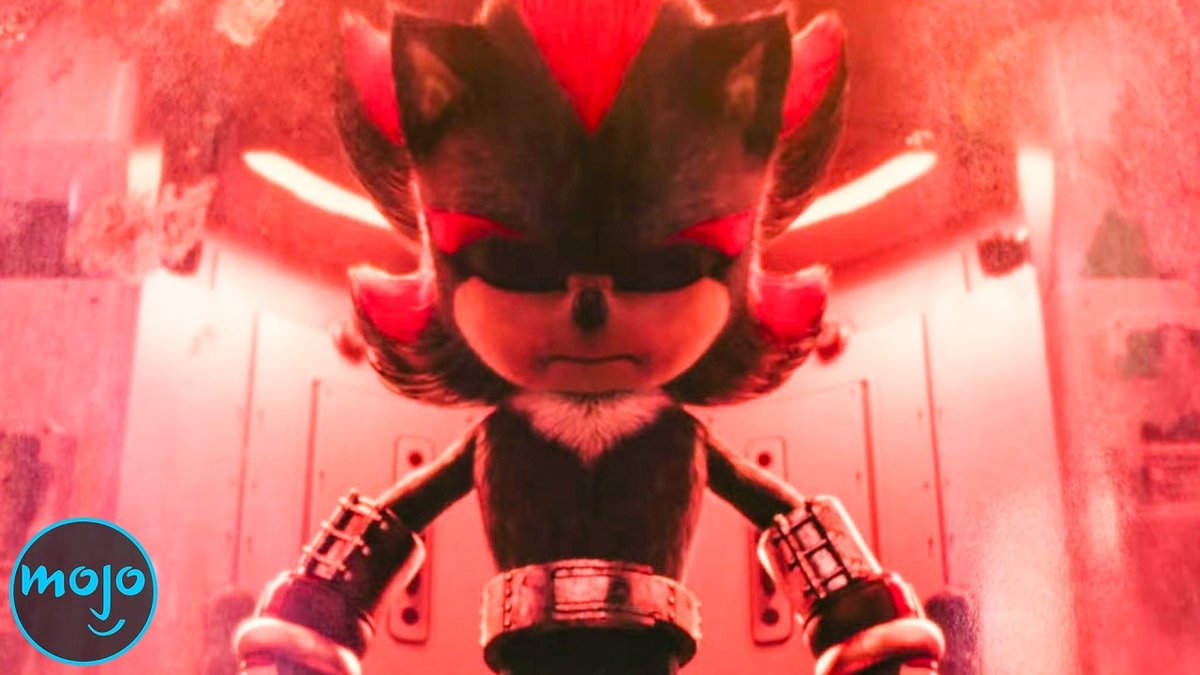
Shadow the Hedgehog. The name itself conjures images of a dark, brooding speedster, a formidable rival to Sonic, and an anti-hero whose past is shrouded in tragedy and complex motivations. More than just a recolor of the blue blur, Shadow carved out his own indelible niche in the gaming world, capturing the hearts of fans with his unique blend of power, sorrow, and unwavering purpose. To truly understand this iconic character, we must journey back to Shadow the Hedgehog's origins and first game appearances, peeling back the layers of his creation, his tragic past, and his explosive debut.
This isn't just a simple character bio; it's a deep dive into how a single government raid, a dying wish, and fifty years of stasis forged one of gaming's most compelling figures. We'll explore not only who Shadow is, but why he is, tracing the narrative threads that have made him an enduring fan favorite across games, comics, and now, the silver screen.
At a Glance: Key Takeaways on Shadow the Hedgehog
- Birth of an "Ultimate Lifeform": Shadow was engineered by Professor Gerald Robotnik on the Space Colony ARK, intended for medical breakthroughs and the betterment of humanity, not destruction.
- Tragedy Shapes His Core: His closest friend, Maria Robotnik, was mortally wounded protecting him during a government raid, her dying wish for him to protect humanity becoming his lifelong duty.
- Explosive Debut: He first appeared in Sonic Adventure 2 (2001) as a mysterious, powerful rival to Sonic, instantly distinguishing himself with his serious demeanor and dark aesthetic.
- Anti-Hero Defined: Shadow consistently operates by his own moral compass, driven by logic, emotion, and duty to Maria's memory, making him a complex anti-hero rather than a clear villain.
- Chaos Energy Master: His signature abilities include super speed, hover shoes, and manipulation of time and space via Chaos Control, powered by Chaos Emeralds.
- Enduring Popularity: His unique backstory, powerful abilities, and evolving role have cemented his status as a beloved and central figure in the Sonic universe, leading to his own game and a significant role in upcoming films.
The Genesis of the Ultimate Lifeform: A Visionary's Dream and a Dark Secret
Imagine a future where humanity could overcome any ailment, even death itself. That was the ambitious dream of Professor Gerald Robotnik, Dr. Eggman's grandfather, as he toiled away on the orbital marvel known as the Space Colony ARK. Gerald wasn't just building a weapon; he was attempting the impossible: creating the "Ultimate Lifeform." His goal? To achieve medical breakthroughs, find a cure for incurable diseases, and perhaps even unlock the secrets of eternal life for the benefit of all mankind. This was the true, benevolent purpose behind Shadow's existence.
Shadow the Hedgehog was the culmination of this grand, albeit ethically questionable, scientific endeavor. He was engineered for peak performance, incredible resilience, and an unparalleled capacity to harness the mystical energies of the Chaos Emeralds. Yet, for all his formidable design, Shadow's early years weren't spent in a sterile lab alone. He shared his life with Gerald's granddaughter, Maria Robotnik.
Maria became Shadow's anchor, his closest friend, and the embodiment of the humanity he was created to serve. Their bond was pure, a stark contrast to the cold, calculating environment of advanced scientific research. It was through Maria that Shadow experienced genuine companionship and learned the true meaning of hope and kindness. This formative relationship was crucial, planting the seeds of altruism in a being designed for ultimate power.
A Promise Forged in Tragedy: The Raid on ARK
The dream of the Ultimate Lifeform, however noble in its initial intent, quickly spiraled into a nightmare. The government organization known as Guardian Units of Nations (GUN) viewed Gerald's research with suspicion and fear, perceiving Shadow as a potential threat to global security. In a catastrophic preemptive strike, GUN raided the Space Colony ARK.
The raid was brutal and swift, leaving destruction in its wake. Amidst the chaos, Maria, selfless to the end, made a desperate bid to save Shadow. She guided him to an escape pod, pushing him inside, her hands pressing the launch button even as a GUN soldier's weapon discharged. Maria was mortally wounded, her life ebbing away, but not before delivering a final, poignant plea to her dearest friend. Her dying wish, whispered with her last breath, was for Shadow to protect humanity on Earth, to bring them hope, and to show them the good that still exists.
This single, devastating event didn't just end a life; it irrevocably shaped Shadow's entire being. Maria's sacrifice, her unwavering belief in humanity despite their actions, became the guiding star of Shadow's existence. It transformed his purpose from a purely scientific endeavor into a deeply personal, emotional mission. His often cold, calculating demeanor, his fierce independence, and his powerful actions are all filtered through the lens of that tragic day and the promise he made. He is an anti-hero not out of inherent malice, but out of a profound sense of duty and the burning memory of the one person who truly understood him.
Awakening a Rival: Shadow's Explosive Debut in Sonic Adventure 2 (2001)
Following Maria's death and his escape from the ARK, Shadow landed on Earth, only to be recaptured by GUN. Deemed too dangerous, he was placed in stasis, locked away in a secret facility for fifty long years. It was here, in this suspended animation, that he awaited his unwitting liberator.
That liberator arrived in the form of Dr. Ivo "Eggman" Robotnik, Gerald's grandson. Eggman, having discovered his grandfather's secret journal and the existence of the "Ultimate Lifeform," sought to harness Shadow's power for his own schemes of world domination. He freed Shadow, believing he could control this formidable creature. Shadow, initially driven by a thirst for vengeance against humanity for Maria's death, and manipulated by Eggman, agreed to help activate Gerald's ultimate weapon: the Eclipse Cannon, a superlaser that had been modified by Gerald to destroy Earth as a final act of revenge.
Shadow's introduction in Sonic Adventure 2 (2001) was nothing short of iconic. He was presented as Sonic's dark doppelganger, a mysterious figure with matching speed and a chillingly serious demeanor. This instantly created a compelling rivalry, pushing Sonic to his limits and introducing a more mature, emotionally complex narrative to the franchise. Players were immediately drawn to his dark design, his powerful abilities, and the enigma of his past.
As the story of Sonic Adventure 2 unfolded, Shadow underwent a profound internal struggle. Through interactions with Sonic, Rouge the Bat, and Amy Rose, and a slow, painful reawakening of his true memories and Maria's dying wish, he began to question his path of destruction. He realized Gerald's final plan was not what Maria would have wanted. In a climactic moment of self-reflection and duty, Shadow ultimately joined Sonic to foil Gerald's destructive plan, seemingly sacrificing himself in the process to save the very humanity he had initially sworn to avenge. This act solidified his place as an anti-hero, always choosing his own methods based on a blend of logic, emotion, and an unshakeable commitment to Maria's final plea.
Unpacking Shadow's Arsenal: Speed, Chaos, and Raw Power
Shadow isn't just a grim face; he's a force of nature, a being engineered for unparalleled combat and survival. His impressive array of abilities are rooted in his incredible speed, raw strength, and mastery over Chaos energy.
At his core, Shadow is one of the fastest characters in the Sonic universe, often depicted as matching or even surpassing Sonic's incredible velocity. This speed isn't just for running; it's enhanced by his signature rocket-powered hover shoes, which allow him to glide effortlessly, perform high-speed maneuvers, and deliver devastating kicks mid-air.
His true power, however, lies in his innate connection to Chaos energy. His signature ability, and perhaps the most iconic, is Chaos Control. By harnessing the power of a Chaos Emerald, Shadow can manipulate time and space itself. This allows him to perform incredible feats such as:
- Teleportation: Instantly vanishing and reappearing anywhere within his line of sight or even across vast distances.
- Time Freezing: Temporarily halting the movement of enemies or projectiles around him, giving him a critical advantage.
- Instant Long-Distance Travel: Using Chaos Control to warp across continents or even through space in the blink of an eye.
Beyond Chaos Control, Shadow possesses other potent Chaos-based attacks. The Chaos Spear allows him to project sharp, piercing energy projectiles at his foes, while the Chaos Blast unleashes a devastating red explosion of raw Chaos energy, incinerating everything in its immediate vicinity.
Shadow's combat style is a brutal fusion of his energy powers and formidable hand-to-hand combat skills. He's not afraid to get up close and personal, delivering powerful punches and kicks, often augmented by his hover shoes for added impact. Furthermore, as the "Ultimate Lifeform," Shadow possesses impressive durability. He was engineered to survive extreme conditions and recover quickly from damage, making him incredibly difficult to defeat.
When the stakes are highest, and all seven Chaos Emeralds are gathered, Shadow can transform into Super Shadow. In this state, his speed dramatically increases, often surpassing Super Sonic's, and he gains the ability of flight. His Chaos abilities are amplified exponentially, turning him into an almost unstoppable force, a form typically reserved for major boss fights or the climactic finales of his story arcs. To truly appreciate the scale of his power and see him in action, you might want to check out the recent game Sonic X Shadow Generations which showcases his abilities with modern flair.
The Anti-Hero's Journey: A Look at Shadow's Character Evolution
From his very first appearance, Shadow has been consistently portrayed not as a villain, but as an anti-hero. He operates in the morally gray areas, often choosing methods that might seem ruthless or uncooperative to achieve what he believes is the greater good. His actions are not driven by a desire for conquest or personal gain, but by a deep-seated sense of duty to fulfill Maria's dying wish to protect humanity.
This dedication often puts him at odds with Sonic and his friends, whose more idealistic approaches sometimes clash with Shadow's pragmatic, results-oriented mindset. Shadow's anti-hero status is characterized by:
- Moral Ambiguity: He doesn't always align with the "good guys," and his alliances can shift based on his assessment of the situation and what he believes is necessary.
- Self-Reliance: He prefers to work alone, relying on his own judgment and power rather than conforming to team dynamics.
- A Haunted Past: The tragedy of Maria's death remains a constant motivator, fueling his determination and often giving his personality a stoic, somber edge.
- Choosing His Own Methods: Shadow isn't bound by conventional heroics; if a situation demands a darker, more aggressive approach, he won't hesitate.
Over his two decades of existence, Shadow's character has evolved, exploring different facets of his past and his purpose. His journey is one of self-discovery, confronting his origins, and grappling with the weight of Maria's legacy. He might appear cold, but beneath the surface lies a profound sense of loyalty and a fierce protectiveness towards the innocent, even if he expresses it in his own unique, often abrasive, way.
Beyond the Main Story: Early Appearances and Expanding Lore
Shadow's immediate popularity after Sonic Adventure 2 led to a rapid expansion of his role within the Sonic franchise. Fans couldn't get enough of the brooding hedgehog, and SEGA was quick to capitalize on his appeal.
His first significant follow-up appearance was in Sonic Heroes (2003), where he was a central figure in Team Dark, alongside Rouge the Bat and E-123 Omega. Here, his struggle with amnesia and the mystery surrounding his true identity became a key plot point, further deepening his character.
The immense fan demand for more of Shadow's story culminated in him receiving his very own video game, Shadow the Hedgehog, released in 2005. This ambitious title aimed to delve deep into his origins, offering players multiple story paths, decisions, and endings based on their choices to align with heroes, villains, or remain neutral. This game notably introduced firearms and vehicles into the Sonic universe, a controversial decision that garnered mixed reviews. However, despite its divisive reception, the game underscored the undeniable fan thirst for a deeper exploration of Shadow's personality and past.
Beyond his solo venture, Shadow continued to make impactful appearances in numerous other Sonic titles, including Sonic the Hedgehog (2006) – often referred to as 'Sonic 06' – where he played a pivotal role in the narrative. Later titles like Sonic Generations and Sonic Forces consistently depicted him as a powerful fighter, either supporting Sonic against formidable threats or challenging him in intense rivalries. These appearances further solidified his combat prowess and complex character arc, reinforcing his iconic status.
The expansion of Shadow's lore wasn't limited to games. Animated shows like Sonic X provided a detailed exploration of his backstory and his poignant bond with Maria, bringing his emotional depth to a wider audience. Comics from Archie Comics and, more recently, IDW Publishing have also taken Shadow's character into compelling new directions, exploring alternative timelines and philosophical dilemmas that only an "Ultimate Lifeform" could face. For fans eager to dive deeper into Shadow's combat prowess and unique abilities, the upcoming Sonic X Shadow Generations release promises a fresh experience.
Shadow on the Silver Screen: Bringing the Ultimate Lifeform to New Audiences
The enduring popularity of Shadow has transcended the gaming and comic realms, now making a significant leap into live-action cinema. His dramatic appearance at the very end of Sonic the Hedgehog 2 (2022) sent shockwaves through the fandom. The post-credits scene teased his existence, revealing his discovery by GUN and setting the stage for a much larger role.
This cameo has generated immense fan excitement, confirming that the cinematic universe is ready to embrace the darker, more complex aspects of the Sonic lore. Shadow is set to play a central role in the highly anticipated Sonic the Hedgehog 3 (2024), where his "Ultimate Lifeform" origins and tragic backstory with Maria are expected to be explored in depth. This marks a critical moment for the character, introducing him to a massive new audience and cementing his status as a key figure in the global pop culture landscape. His cinematic debut is poised to bring his complex narrative and powerful presence to life in a way that resonates with both long-time fans and newcomers alike. It's a testament to the fact that his design ethos continues in games like the upcoming Sonic X Shadow Generations title, reinforcing his iconic status across all media.
Your Guide to Understanding Shadow: FAQs & Misconceptions
Shadow's complex nature often leads to questions and misunderstandings. Let's clear up some common points about the Ultimate Lifeform.
Is Shadow the Hedgehog evil?
No, Shadow is not evil. He is consistently portrayed as an anti-hero. While his methods can be harsh, and he often appears cold or ruthless, his actions are ultimately driven by his core purpose: protecting humanity, fulfilling Maria's dying wish, and upholding his own sense of justice. He operates on his own moral code, which sometimes aligns with Sonic's and sometimes doesn't, but his intentions are rarely malevolent.
Who is stronger, Sonic or Shadow?
This is a hotly debated topic among fans, and the answer often depends on the specific game or situation. Generally, Sonic and Shadow are portrayed as near-equals in terms of raw speed and combat ability. They are designed to be rivals. Shadow often has an advantage with his direct control over Chaos energy and his unique durability as the Ultimate Lifeform. However, Sonic's improvisational style and indomitable spirit often give him an edge. In their Super forms, both gain immense power, but again, their capabilities often scale to each other, making them formidable adversaries or allies.
Is Shadow immortal?
No, not in the traditional sense of being unable to die. The term "Ultimate Lifeform" implies he was engineered to be the pinnacle of biological design: extremely durable, highly resistant to damage, capable of rapid recovery, and possessing an extended lifespan compared to regular beings. However, he can be defeated, as demonstrated by his apparent sacrifice in Sonic Adventure 2. He's highly resilient and difficult to kill, but not truly immortal.
Does Shadow remember Maria Robotnik?
Yes, absolutely. The memory of Maria Robotnik and her dying wish is arguably the single most defining aspect of Shadow's character. While he experienced temporary amnesia in some storylines (e.g., Sonic Heroes), her memory is deeply ingrained in his psyche and serves as a constant driving force behind his actions. He frequently reflects on her words and her sacrifice, guiding his decisions and reminding him of his purpose.
The Enduring Legacy of the Ultimate Lifeform
Shadow the Hedgehog isn't just a character; he's a phenomenon. From his mysterious and tragic origins on the Space Colony ARK to his explosive debut as Sonic's dark rival, his journey has been one of profound depth and undeniable impact. He represents the darker, more serious side of the Sonic universe, challenging traditional notions of heroism and injecting complex moral dilemmas into the franchise.
His unique blend of super speed, devastating Chaos powers, and a heart-wrenching backstory has solidified his place as an iconic anti-hero. Whether he's teaming up with Sonic to save the world or challenging him to a furious showdown, Shadow consistently pushes the boundaries of what a Sonic character can be. His popularity has ensured his presence across every major medium, from video games to animated series, comics, and now, the highly anticipated cinematic universe.
To truly appreciate the enduring appeal of the Sonic franchise, understanding Shadow's origins and early appearances is crucial. He stands as a testament to the power of a well-crafted character, a figure whose internal struggles and external prowess continue to captivate audiences worldwide. The nuanced portrayal of Shadow remains central to the franchise's appeal, even in games that explore his dual nature, such as Sonic X Shadow Generations. He is a reminder that even in a world of vibrant colors and boundless energy, there's always room for a little shadow.