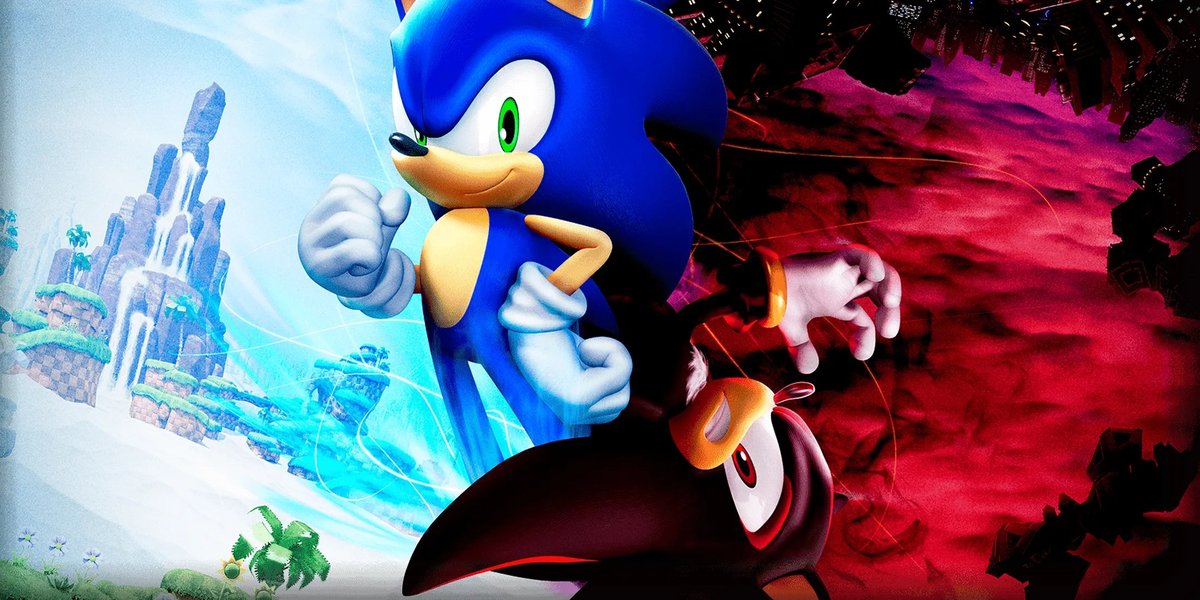
The original Sonic Generations from 2011 was a heartfelt celebration of the Blue Blur's legacy, bringing together Classic and Modern Sonic for a time-bending adventure. Yet, for fans of Sonic's brooding rival, Shadow the Hedgehog, his Shadow's Role and Impact in Sonic Generations (Game) felt notably understated. He appeared, offered a quick challenge, and then joined the final battle, but his own journey during this catastrophic event remained largely a mystery. Fast forward, and a new parallel narrative, Shadow Generations, has burst onto the scene, not only filling in these blanks but fundamentally redefining Shadow’s presence and significance within that pivotal timeline. It’s a complete recontextualization that transforms a minor cameo into a saga of self-discovery and destiny.
At a Glance: Shadow's Reimagined Role
- Filling the Gaps: Shadow Generations provides a comprehensive, parallel storyline to Sonic Generations, revealing what Shadow was doing while Sonic battled the Time Eater.
- Defining the Ultimate Lifeform: The game aims to clarify Shadow's identity, moving beyond his past characterization as merely Sonic's moody rival.
- Confronting the Past: Shadow faces his original antagonist, Black Doom, forcing him to reconcile with his origins and purpose.
- Unique Gameplay: Shadow's abilities and new "Doom Powers" offer a distinct playstyle, separating him explicitly from Sonic.
- Lore Expansion: It weaves together elements from Shadow's entire history, paying homage to his previous appearances and deepening the Sonic Generations universe.
- Bundled Experience: This new chapter isn't standalone; it's bundled with a remastered Sonic Generations, offering a complete, intertwined narrative experience.
The Original Enigma: Shadow in Sonic Generations (2011)
Think back to the original Sonic Generations. Sonic’s birthday party gets rudely interrupted by the Time Eater, a mysterious entity that devours time and space, scattering his friends across White Space and distorting various iconic zones. Sonic and Classic Sonic team up to restore history, battling through reimagined levels and rescuing their trapped allies.
Shadow the Hedgehog, as you might recall, was one of those friends. You'd encounter him in the "Rival Battle" against Modern Shadow in Crisis City, a memory plucked from Sonic the Hedgehog (2006). Following that, he joins Sonic and the other allies in the final confrontation against the Time Eater itself. His dialogue was minimal, his motivation for being there seemed purely reactive to the crisis, and his story arc was, for all intents and purposes, non-existent within the game itself. He was there, he helped, but the why and how of his personal journey through the Time Eater's chaos were left entirely to the player's imagination.
This left a significant void for fans. The "Ultimate Lifeform" with a complex past felt like a background character in a game celebrating all of Sonic's history. It was a missed opportunity to explore the unique perspective of a character intrinsically tied to chaos and power during a timeline-shattering event. This is precisely the void that Shadow Generations steps in to fill, retroactively enriching the 2011 narrative.
A Parallel Narrative Unveiled: Enter Shadow Generations
The true depth of Shadow's Role and Impact in Sonic Generations (Game) isn't found in the 2011 title alone, but rather through the lens of Shadow Generations. This new installment, released alongside a remaster of the original game, isn't just a spin-off; it's a meticulously crafted parallel story that takes place simultaneously with Sonic's adventure.
The developers, Sonic Team and Sega, recognized the untapped potential of Shadow during the Time Eater crisis. Their ambition was clear: to redefine Shadow's identity as the "Ultimate Lifeform," move him beyond the "brooding anti-hero rival" trope he'd often been confined to, and finally provide a comprehensive character arc that honors his entire history. This is his first starring role since Shadow the Hedgehog (2005), a clear signal of the team's commitment to giving him the spotlight he deserves.
Why Now? Redefining the Ultimate Lifeform
For years, Shadow has been a fan-favorite, yet his characterization has sometimes wavered. Shadow Generations directly addresses this by aiming to provide a definitive answer to who Shadow truly is. It's an opportunity to explain the nuances of his creation, his connection to his past, and his ultimate purpose, leveraging the Time Eater anomaly as a catalyst for this internal and external journey. The game explicitly seeks to separate Shadow's gameplay and narrative style from Sonic's, highlighting his unique strengths and character traits.
Shadow's Untold Journey During the Time Eater Crisis
As Sonic was blissfully unaware, preparing for a birthday party, Shadow was already on a different path. Haunted by premonitions of the Black Arms' return, he instinctively hitched a ride on a G.U.N. shuttle to the Space Colony ARK—the very place of his creation 50 years prior. Detecting unusual bio-signatures, he foregoes Sonic's celebration, beginning a solitary investigation that quickly plunges him into the heart of the Time Eater's chaos.
He discovers strange distortions on the ARK and soon encounters Doom's Eye, the third eye of Black Doom, his original nemesis. This encounter pulls him into a twisted version of Radical Highway, aptly named the Doom Zone. After a skirmish, he seizes a mysterious Black Arms emblem and returns to the ARK, only to stumble upon a fake Chaos Emerald fabricated by Tails. It's at this moment that the Time Eater strikes, dragging Shadow and the entire ARK into the White Space, mirroring Sonic's predicament.
Within his section of White Space, Shadow observes the menacing Black Moon, the Black Arms' satellite, and crosses paths with E-123 Omega. Mysteriously, dark wings briefly manifest on his back before vanishing. He soon discovers a Sealing Device that releases this latent dark energy. As it envelops him, Shadow unlocks his first "Doom Power": Doom Spears, allowing him to unleash five red and black Chaos Spears simultaneously. With this, the ARK and White Space itself begin to recover and expand, a direct consequence of Shadow's actions.
Unlocking New Powers: The Doom Arsenal
Shadow's journey through the distorted White Space isn't just about survival; it's about evolution. As he confronts remnants of his past and the encroaching influence of Black Doom, he progressively unlocks a new suite of abilities dubbed "Doom Powers." These aren't just flashy moves; they are integral to his distinct gameplay style and narrative progression, further differentiating him from Sonic.
While Shadow retains many of Modern Sonic’s core abilities like the Spin Jump, Homing Attack, Stomp, Boost, and Air Boost, he sheds Light Speed Dash and Drift in favor of his signature Chaos abilities: Chaos Snap (a homing attack variant that teleports him to foes), Chaos Spears (for long-range attacks), and Chaos Control (a time-stopping ability when his Chaos Gauge is full, enabling shortcuts and quick dashes).
But it's the Doom Powers that truly set him apart:
- Doom Spears: Acquired early in his journey, this power lets Shadow launch up to five Chaos Spears at once using a lock-on cursor, making short work of groups of enemies or distant threats.
- Doom Blast: After progressing through Rail Canyon and being pulled back into the Doom Zone, Shadow gains this ability. It uses Chaos Snap to launch Black Arms enemies upwards, allowing him to direct them strategically and teleport to new locations. This is key for environmental puzzle-solving and reaching previously inaccessible areas.
- Doom Surf: Following a grueling encounter with the Biolizard, Shadow learns to surf on water using a stingray-like construct. His Quick Step transforms into a Spin Attack in water, offering unique aquatic traversal and combat.
- Doom Morph: As Shadow explores Kingdom Valley and then Sunset Heights, encountering past versions of Maria and Gerald, he acquires Doom Morph. This transformation turns him into a squid-like entity, enabling him to navigate through corrupt slime. It functions like a Morph Ball, allowing him to swim on walls, ceilings, and grapple with tentacles, opening up complex exploration possibilities.
- Doom Wing: This ultimate Doom Power is unlocked late in the game, after confronting Mephiles the Dark and enduring Black Doom's psychological torment. Similar to Super Sonic, Doom Wing makes Shadow invincible, grants unlimited Boost on land, and allows him to hover in the air. It requires 50 Rings and depletes over time, ending when Rings run out. Players can even choose to start a stage with Doom Wing active, impacting their time records.
These Doom Powers are more than just power-ups; they reflect Shadow’s internal struggle and his growing connection to the very forces he seeks to overcome. They are a physical manifestation of his heritage and his determination.
Confronting the Past: Black Doom, Maria, and Gerald
Shadow's journey isn't just a chase; it's a deeply personal excavation of his past. The Time Eater's distortions, while chaotic, inadvertently create pockets where Shadow can interact with figures long lost to him, forcing him to confront the traumas that have shaped his existence.
After overcoming the Biolizard, new areas of White Space emerge, and the Black Moon, Black Doom's stronghold, begins to tear. Black Doom, communicating through Doom's Eye, reveals his survival and his sinister plan to exploit the Time Eater's anomaly to rebuild the Black Arms. This confirmation reignites Shadow's primary mission: to stop his progenitor.
His path takes him through Kingdom Valley, where he briefly encounters Big the Cat, and then into Sunset Heights and another Doom Zone. It is here that the temporal distortions become most profound, allowing him to reunite with past versions of Maria Robotnik and Professor Gerald Robotnik. He even rescues Maria from Black Warriors, a poignant moment that offers a glimpse into a history he desperately wished he could change.
The temptation is immense. The chance to alter their tragic fate, to save them from their inevitable doom, is laid bare. Yet, Shadow, with his newfound resolve and the looming threat of Black Doom, makes the difficult choice to prioritize the present, to focus on the greater fight. He understands that dwelling on the past, however painful, would distract him from his mission to protect the future. This decision highlights a profound maturity in his character, signaling his evolution beyond mere vengeance.
After defeating the formidable Metal Overlord, White Space expands further, and the Black Moon sends out ominous tendrils. Gerald Robotnik, from his temporal pocket, provides a chilling revelation: Shadow's connection to Black Doom is symbiotic. As Shadow grows stronger, so too does Doom, and if left unchecked, Doom could enslave Shadow's mind or even possess his body. This revelation solidifies the stakes: Shadow must master his Doom Powers and use them against their source, not be consumed by them. He vows to wield these dark gifts against Doom himself, a promise that solidifies his anti-heroic resolve.
A Clash of Rivals, A Shared Purpose: Shadow and Sonic's Intersecting Paths
While Shadow Generations is primarily Shadow's story, it doesn't ignore his connection to Sonic. Their paths, though separate, are intrinsically linked by the Time Eater crisis, and their goals, though pursued differently, ultimately align.
During his exploration of Chaos Island with his newly acquired Doom Morph ability, Shadow finds himself in City Escape—a zone from Sonic's section of White Space. Here, he encounters Sonic, who, unbeknownst to Shadow, is on his own quest to gather Chaos Emeralds to defeat the Time Eater. Sonic demands the Chaos Emerald from Shadow, but Shadow, ever focused on his immediate mission to vanquish Black Doom, refuses. This refusal ignites a heated duel on the ARK.
During their intense battle, Shadow deliberately holds back, choosing not to unleash his burgeoning Doom Powers against Sonic. This restraint is telling; despite their rivalry, Shadow recognizes the bigger picture and understands that Sonic is an ally, not a true enemy in this crisis. Sonic, unaware of Shadow's internal struggles and his parallel mission, wins the fight, reclaiming what he believes is a genuine Chaos Emerald.
However, Shadow reveals his cunning plan: Sonic has actually taken a fake Chaos Emerald. Shadow's intention was to have Rouge the Bat swap it for a real one only after Black Doom had been dealt with. This clever manipulation underscores Shadow's pragmatic and strategic mind, showing that his refusal wasn't borne of selfishness, but a calculated move within his broader strategy. After this revelation, Shadow continues his solo crusade, eventually overcoming Mephiles the Dark, another specter from his past.
This brief but significant intersection highlights the differing approaches of the two heroes. Sonic, direct and open, focuses on the immediate threat of the Time Eater. Shadow, stoic and secretive, tackles the root cause of his own personal catastrophe, knowing that his victory against Black Doom is a crucial step in the larger battle to restore time and space for everyone, including Sonic. Their rivalry, in this context, becomes a testament to their individual strengths, both necessary for the world's salvation.
The Climax: Overcoming the Ultimate Threat
Shadow's journey culminates in a final, brutal confrontation with Black Doom. This isn't just a boss battle; it's the culmination of his entire character arc, a definitive statement on his identity as the "Ultimate Lifeform," and a testament to his ability to choose his own destiny.
The pressure intensifies when Black Doom, through sheer malice, begins to torment Maria and Gerald Robotnik in their temporal prisons. Shadow is nearly consumed by a resurgence of hatred, on the brink of succumbing to the very darkness he's fought so hard to control. But Maria, from across the temporal divide, manages to soothe his rage, reminding him of his true purpose and the love that motivated his creation. This moment is pivotal, affirming his control over his emotions and his Doom Powers. Empowered by this resolve, Shadow finally gains his last Doom Power: Doom Wing.
The Black Moon mutates fully, a terrifying spectacle that begins to pull all of White Space into the Doom Zone. After a final, poignant farewell to Gerald and Maria, Shadow takes flight towards the menacing Black Moon, soaring through a corrupted Radical Highway. His path leads him directly to Black Doom himself.
Black Doom, true to his monstrous nature, transforms first into Devil Doom, then into the even more formidable Neo Devil Doom. But Shadow is no longer the conflicted, easily manipulated anti-hero. He is too strong, too self-aware, too determined to be controlled by his creator. Using the very Chaos Emeralds Sonic unknowingly possessed (or had delivered by Rouge) and harnessing the full might of his Doom Powers, Shadow battles Black Doom with everything he has, ultimately defeating him for good. The cycle of his past, the haunting influence of his creator, is finally broken.
With Black Doom's defeat, the Black Moon shatters, and the corrupting Doom Powers within Shadow begin to recede, signifying the triumph of his will over his dark heritage. He hands the real Chaos Emerald to Rouge, entrusting her to swap it with the fake one Sonic still carries, thus contributing to Sonic’s eventual victory against the Time Eater. As the control Doom had over White Space dissipates, Maria and Gerald begin to fade, returning to their original timeline. Shadow, for a heart-wrenching moment, wishes to prevent their departure, to hold onto the echoes of his past. But Maria stops him, urging him to look forward, to continue his journey for the sake of his friends. Shadow, with a single tear tracing a path down Rouge’s cheek as he rushes past her, reluctantly leaves them behind, knowing he must now help Sonic.
Legacy and Reinterpretation: The True Impact
The release of Shadow Generations fundamentally alters our perception of Shadow's Role and Impact in Sonic Generations (Game). What was once a subtle, almost background presence in Sonic's story has been transformed into a pivotal, parallel narrative that enriches the entire Sonic Generations universe.
This expanded story solidifies Shadow's identity as the "Ultimate Lifeform" in a way no previous game has. It's not just a title; it's a destiny Shadow actively shapes through his choices. The game dives deep into his struggles with his past, his origins, and his raw power, showing that his character is far more complex than a simple rival. He's a protector, a strategist, and a survivor who ultimately makes selfless decisions for the greater good, even when it means personal sacrifice.
By taking his journey to the forefront, Shadow Generations retroactively adds immense depth to the Sonic Generations narrative. Suddenly, when you see Shadow join Sonic in the final battle against the Time Eater, you understand the silent ordeal he has just endured, the monumental battle he has fought, and the personal demons he has conquered. He’s not just showing up; he’s arriving from his own epic struggle, bringing his own strength and wisdom to the table. This provides a fuller, more complete picture of the widespread chaos caused by the Time Eater and how each hero responded in their unique way.
The game also successfully redefines Shadow's character, asserting that he is indeed "more than just a rival anti-hero." His actions, his internal conflicts, and his ultimate triumph against Black Doom showcase a hero capable of immense personal growth and profound moral choices. He uses his dark heritage to fight against darkness itself, embodying a complex heroism that stands distinct from Sonic's more straightforward optimism. This nuanced portrayal is a powerful statement about his place in the Sonic canon. For a deeper dive into how this re-evaluation impacts the broader series narrative, consider exploring the overarching context provided by sonic shadow generation within the franchise.
Gameplay Mechanics: Shadow's Distinctive Style
Beyond the lore, Shadow's expanded role brings a unique and refreshing gameplay experience to the Sonic Generations framework. While sharing core mechanics with Modern Sonic, Shadow's distinct abilities and newly acquired Doom Powers carve out a playstyle all his own, emphasizing combat, precise movement, and strategic power usage.
Shadow retains many familiar Modern Sonic abilities, making the transition seamless for players:
- Spin Jump: The classic aerial attack.
- Homing Attack: Target and home in on enemies or springs.
- Stomp: A powerful downward attack.
- Boost: Accelerate at high speed on the ground.
- Air Boost: A limited boost while airborne for extended jumps or quick adjustments.
However, Shadow diverges significantly by not possessing Light Speed Dash or Drift, instead leveraging his unique Chaos abilities: - Chaos Snap: A variant of the Homing Attack that allows Shadow to teleport almost instantaneously to an enemy or specific target without impediment. This makes him incredibly agile in combat, allowing for quick target acquisition and evasive maneuvers.
- Chaos Spears: Shadow can launch these powerful energy projectiles to stun enemies or hit distant targets, providing a ranged combat option that Sonic lacks.
- Chaos Control: When Shadow's Chaos Gauge is full (built by attacking enemies and collecting rings), he can activate Chaos Control to stop time for 5 seconds. This not only allows him to bypass dangerous obstacles but also opens up new paths and shortcuts with the Chaos Dash, a burst of speed during the frozen time.
The five Doom Powers, which he gains progressively through his parallel adventure, further define his gameplay:
- Doom Spears: A significant upgrade to his standard Chaos Spears, allowing him to fire up to five at once with a lock-on cursor. This transforms him into a formidable ranged combatant, clearing groups of enemies with ease.
- Doom Blast: This ability combines Chaos Snap with a unique Black Arms energy, allowing Shadow to launch enemies into the air, direct their trajectory, and then teleport to their new location. It's a versatile tool for both combat and intricate platforming, opening up vertical pathways.
- Doom Surf: This power allows Shadow to glide across water using a manta ray-like construct. His Quick Step ability transforms into a rapid Spin Attack in water, making water sections a dynamic and engaging part of his levels rather than a hindrance.
- Doom Morph: An incredibly unique ability, Doom Morph transforms Shadow into a squid-like form, enabling him to navigate through the viscous, corrupt slime that permeates many of the Doom Zones. In this form, he can swim on walls and ceilings and grapple with tentacle-like obstacles, offering entirely new dimensions of exploration.
- Doom Wing: Shadow's ultimate power-up. By collecting 50 Rings, he can activate Doom Wing, making him invulnerable, granting unlimited Boost on land, and allowing him to hover freely in the air. While Rings deplete over time, Doom Wing dramatically changes how Shadow approaches stages, offering unparalleled freedom and power. Players can even strategically decide to start a stage in Doom Wing form, impacting their records and approach to challenges.
This combination of classic Sonic mechanics, signature Chaos abilities, and transformative Doom Powers makes playing as Shadow a distinctly different experience. It's less about raw speed alone and more about strategic combat, precise environmental traversal, and managing powerful, evolving abilities.
The Fan Service and Future Implications
The reception to Shadow Generations has been largely positive, particularly for its deep fan service and high replay value. Players have praised its respectful homage to Shadow’s complex history, incorporating elements from Shadow the Hedgehog (2005), Sonic Adventure 2, and Sonic the Hedgehog (2006). This isn't just a rehash; it's a narrative that expertly weaves these past events into a coherent, defining story for the character, clarifying long-standing questions and misconceptions.
The game's success in redefining Shadow and explicitly separating his gameplay and character arc from Sonic's sets an exciting precedent for the future of the franchise. It proves that there's ample room for character-focused narratives that don't always revolve around Sonic himself. This could pave the way for other characters in the vast Sonic universe to receive similar expansions, adding layers of complexity and depth to the overarching lore. It demonstrates that Sega and Sonic Team are willing to listen to fan desires for deeper character exploration and more varied gameplay experiences.
While some technical issues and the implementation of Doom Powers (specifically Doom Blast) received minor criticism upon release, the overwhelming sentiment points to a successful re-imagining and a valuable addition to the Sonic canon. For those who grew up with Shadow as a mysterious, morally ambiguous figure, this game serves as a triumphant culmination, validating his significance and cementing his status as a truly unique and impactful character within the Sonic universe.
Beyond the Shadows: What This Means for You (The Player)
If you've played the original Sonic Generations and felt that Shadow's presence was a bit of a tease, or if you're a long-time Shadow fan yearning for his return to the spotlight, then Shadow Generations is essential. It's more than just an add-on; it's the missing half of a story, a crucial piece of the puzzle that makes the 2011 classic feel even more complete.
You'll get to experience a truly distinctive gameplay style, a gripping personal narrative, and a definitive statement on who Shadow the Hedgehog truly is. It's a chance to dive into the mind of the "Ultimate Lifeform" during one of the franchise's most chaotic events, witnessing his journey from silent observer to a pivotal, self-determined hero. The bundle, Sonic X Shadow Generations, offers a comprehensive package that lets you witness both Sonic’s and Shadow’s epic battles against the Time Eater in one seamless, reimagined experience. It's the ultimate way to appreciate the true scope of Shadow's Role and Impact in Sonic Generations (Game) and understand how his parallel path amplified the stakes and diversified the heroism during that fateful crisis.