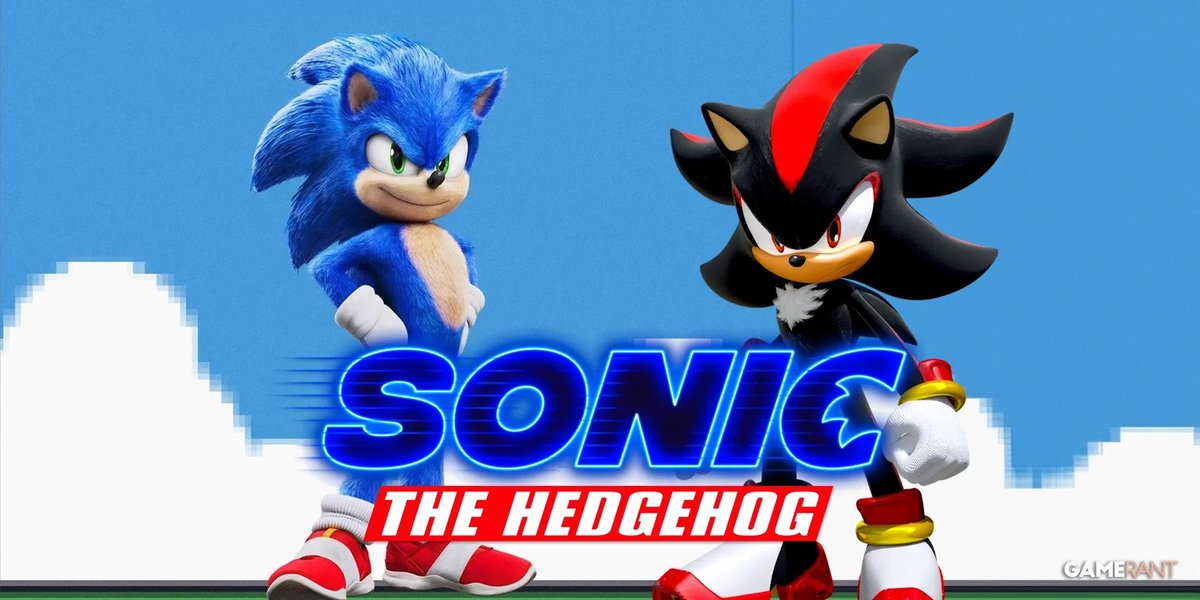
The Ultimate Life Form's Next Chapter: Unpacking Fan Concepts & Theories for a 'Shadow Generations' Spinoff Game
Few characters in gaming lore carry the enigmatic weight and complex history of Shadow the Hedgehog. Introduced as the "Ultimate Life Form," his journey through memory, identity, and purpose has captivated fans for over two decades. Now, with the highly anticipated Shadow Generations hitting consoles and PC on October 25, 2024, the stage is set for a dramatic re-evaluation of Shadow's past and a powerful leap forward in his character arc. As this spin-off promises to resolve narrative threads spanning his entire 20-year history, the fan community is abuzz with speculation. What could a future 'Shadow Generations' spinoff game look like? What theories are already taking hold about Shadow's post-game destiny, new abilities, and the implications for the wider Sonic universe?
Before we dive into the speculation, here's a quick look at what we know:
At a Glance: What We Know About Shadow Generations
- Release Date: October 25, 2024, across multiple platforms (PlayStation, Xbox, Nintendo Switch, Steam).
- A Spin-off, Not Just DLC: This is a full, concurrent campaign within Sonic X Shadow Generations, running parallel to Sonic's adventure.
- Shadow's Second Starring Role: It's his first time as a main character since Shadow the Hedgehog (2005), signaling a serious re-focus on his narrative.
- The Core Conflict: Black Doom returns, trapping Shadow in his memories and forcing him to confront his past choices and identity.
- Gameplay Blend: Expect Modern Sonic's speed and combat from Sonic Generations infused with the open-zone freedom of Sonic Frontiers.
- Power Play: Shadow wields both classic Chaos powers (Snap, Spear, Control) and new Doom powers (Wing, Surf, Spear, Morph, Blast), managed by a Chaos gauge.
- Hub World: Navigate White Space, a 3D hub reminiscent of Sonic Frontiers' Open Zone.
- Iconic Levels Revisited: Explore familiar stages like Space Colony ARK, Rail Canyon, Kingdom Valley, and Sunset Heights, all seen through Shadow's memory-warped perspective.
- Deep Lore Integration: Written by Ian Flynn, known for his extensive Sonic comic work, the game promises to weave together complex story threads from Sonic Adventure 2, Shadow the Hedgehog (2005), and Sonic the Hedgehog (2006).
- Character Growth: The central goal is to give Shadow significant character development and resolution after 20 years.
Shadow's Grand Reckoning: Setting the Stage for the Future
Shadow Generations isn't just another platformer; it's a narrative crucible for its titular anti-hero. Sega and writer Ian Flynn are clearly committed to giving Shadow the character growth he's long deserved, moving him beyond the often-misunderstood portrayals of the past. By trapping him in his memories, Black Doom forces Shadow to confront the foundational moments of his existence: the tragic death of Maria Robotnik, the manipulative influence of Gerald Robotnik, and the dark genesis of his own creation. This deep dive into his past isn't just fan service; it's a necessary step to define who Shadow truly is.
The game's premise, with Black Doom's return and the Time Eater's involvement, immediately signals a high-stakes adventure that transcends simple boss battles. It's about identity, free will, and the legacy of choices made under duress. Shadow's journey through White Space, revisiting fractured memories, serves as a psychological battleground, paving the way for profound internal change. We're not just playing a game; we're witnessing a pivotal moment in a beloved character's story.
The Narrative Crossroads: Resolving 20 Years of Lore
Ian Flynn's involvement as the game's writer is a huge signal to fans that the lore is in safe hands. Flynn has a proven track record of respecting and integrating disparate story elements from across the Sonic universe, often finding ways to make even the most convoluted plot points feel cohesive. For Shadow, this means an opportunity to finally reconcile his origins with his present.
Black Doom's Shadow: Confronting the Source of Corruption
Black Doom, Shadow's biological "father" and a manipulative alien overlord, is central to Shadow's internal conflict. His return means Shadow must directly confront the darkest parts of his genetic legacy and the initial purpose he was given: to destroy humanity. The fact that Shadow is zapped into his memories implies a direct challenge to his core programming and identity. Will Shadow permanently sever his connection to Black Doom's influence, perhaps through a profound act of self-definition that purges the "Doom" elements from his being, or will he find a way to integrate them under his own control, turning a perceived weakness into a unique strength? This pivotal confrontation could redefine his very essence.
Maria, Gerald, and the Weight of the Past
The presence of Maria and Gerald Robotnik is not just a nostalgic callback; it's crucial for Shadow's emotional arc. Maria's dying wish, "Promise me, Shadow, for the sake of all the people on that planet..." has driven much of Shadow's initial characterization. Re-experiencing these memories, especially in the context of confronting Black Doom, forces Shadow to interpret Maria's wish not as a simple directive, but as a moral compass that he has, at times, struggled to follow. How he recontextualizes their influence will dictate his future. Will he finally make peace with the tragedy and step fully into his own purpose, free from the lingering guilt or external definitions?
The Time Eater's Tangled Web: Implications for the Multiverse
The Time Eater, the final boss from the original Sonic Generations, acts as the catalyst for Shadow's journey into White Space. Its ability to distort time and space opens up fascinating possibilities. The presence of the replica yellow Chaos Emerald from Sonic Adventure 2 further blurs the lines between memory and reality, suggesting a more complex interaction with historical events than mere flashbacks. Could Shadow's journey through these warped memories inadvertently affect other timelines or parallel dimensions? The inclusion of the "Terios" DLC version of Shadow further fuels speculation about alternate realities or conceptualizations of the Ultimate Life Form. This could be a subtle nod to the wider multiverse implications that have begun to creep into other major media franchises, potentially setting up future Sonic stories beyond the immediate game. For a deeper dive into the broader universe this game connects to, you might want to Explore Sonic Shadow Generation.
Gameplay Foundations: Echoes of the Past, Hints of the Future
Shadow Generations builds on successful gameplay elements while injecting new mechanics specific to Shadow. This blend is crucial, as it provides a robust foundation for what a future spin-off could offer.
Mastering Chaos and Doom: A New Power Dynamic
Shadow's arsenal of Chaos powers (Chaos Snap, Chaos Spear, Chaos Control) is familiar, but the introduction of Doom powers (Doom Wing, Doom Surf, Doom Spear, Doom Morph, Doom Blast) presents a fascinating dichotomy. The game's narrative explicitly states Shadow initially resists using Doom powers against Sonic, but strategically swaps Chaos Emeralds, implying a moral struggle over their use. This internal conflict is key.
Fan Concept 1: The Integrated Ultimate Form: Many fans theorize that by the end of Shadow Generations, Shadow will master both Chaos and Doom energies, not as separate entities, but as a unified, balanced force. This could lead to a new "Ultimate Form" beyond his current Super Shadow, visually distinct and showcasing his complete control over his heritage. Imagine a form where Chaos and Doom energy swirl in perfect harmony, offering unparalleled speed, strength, and spatial manipulation.
Fan Concept 2: Evolving Chaos Control: Shadow's Chaos Control ability is already incredibly powerful, allowing for time manipulation and teleportation. With the game providing closure to past events, theories suggest his Chaos Control could evolve, perhaps allowing him to not just briefly warp space-time, but to manipulate the environment more extensively, or even momentarily "undo" recent events in gameplay. This would add a tactical layer to his already impressive moveset.
White Space as a Narrative Canvas: From Hub to Open Zone Potential
The 3D hub-world, White Space, resembling the Open Zone from Sonic Frontiers, is more than just a transition area. It's a psychological landscape representing Shadow's fractured mind.
Fan Concept 3: Open Zone for Emotional Exploration: For a future spin-off, White Space could evolve into a true Open Zone, but one that is dynamically shaped by Shadow's emotional state or past choices. Imagine exploring zones that visually manifest his guilt, anger, determination, or resolve, with quests and challenges tied directly to overcoming these internal struggles. This would elevate the "Open Zone" concept from purely geographical exploration to deep character-driven narrative.
Iconic Levels, Fresh Perspectives: Beyond Nostalgia
The selection of levels — Space Colony ARK, Rail Canyon, Kingdom Valley, Sunset Heights, Chaos Island, Radical Highway — are all significant locations in Shadow's history or the broader Sonic lore. Seeing them through his memory adds a unique filter.
Fan Concept 4: Deeper Memory Dives: A spin-off could explore new memory fragments or even entirely original levels that tap into unexplored aspects of Shadow's past. Perhaps levels that delve into his time with G.U.N. after Sonic Adventure 2, or even speculative "what-if" scenarios generated by the Time Eater's lingering influence. The "Tokyo" level from the Sonic the Hedgehog 3 (film) DLC also hints at crossing media, paving the way for more imaginative level concepts that blur lines between game lore, comics, and film.
Unpacking the Fan Theories: What's Next for the Ultimate Life Form?
The core promise of Shadow Generations is significant character growth. But what does that mean for the Ultimate Life Form moving forward? The fan community is already busy crafting intricate theories about Shadow's post-game identity and future role.
Theory 1: Shadow as a Defined Anti-Hero with a Moral Code
For years, Shadow has straddled the line between hero and anti-hero. Post-Generations, many believe he will solidify his identity as a protector of Earth, but one who operates strictly on his own terms, unbound by conventional heroism. He would still be willing to make tough, morally ambiguous choices if the situation demands, but always driven by Maria's true wish: to protect the innocent. This would give him a unique niche in the Sonic roster, distinct from Sonic's unwavering optimism or Knuckles' stoic guardianship.
Theory 2: Team Dark's Expanded Role and a Dedicated Spin-off Series
The game reunites Team Dark (Shadow, Rouge the Bat, and E-123 Omega) early on. Their dynamic – Shadow's intensity, Rouge's cunning, and Omega's destructive loyalty – is a fan favorite.
Fan Concept 5: Team Dark Investigations: A future spin-off could focus entirely on Team Dark, operating as a black-ops unit for G.U.N. or even independently. Imagine mission-based gameplay, where each character's unique abilities are crucial for infiltration, espionage, or all-out combat. This could blend stealth, puzzle-solving, and high-octane action, giving each member time in the spotlight. Rouge's treasure-hunting skills could lead to uncovering ancient artifacts tied to the Chaos Emeralds, while Omega could lead to battling more mechanical threats or even rogue G.U.N. factions.
Theory 3: Black Doom's Finality and Shadow's Genetic Purity
While Black Doom's return is central, many fans hope this game marks his definitive end. If Shadow truly conquers his memories and rejects Black Doom's influence, it could lead to a permanent alteration of his genetic makeup.
Fan Concept 6: The "True" Ultimate Life Form: Some theories propose that Shadow might undergo a form of "genetic purification," shedding any lingering physical or metaphysical connection to Black Doom. This wouldn't necessarily mean losing the Doom powers, but rather re-contextualizing them as powers he controls, not powers derived from Black Doom. This could manifest as a subtle visual change, like his inhibitors glowing with a purer energy, symbolizing his complete autonomy.
Theory 4: Deeper Exploration of Shadow's Empathy and Consciousness
Ian Flynn's writing often highlights subtle character nuances. The context research notes Shadow displaying empathy for the Biolizard and acknowledging Mephiles the Dark as a "mirror." This isn't just throwaway detail; it's significant character development.
Fan Concept 7: Sentient AI/Life Forms as Companions: If Shadow's empathy continues to grow, a future game could see him interacting with or even recruiting other sentient AI or life forms that challenge his initial detached nature. Perhaps a quest to understand and protect a new form of artificial intelligence, or even grappling with his own AI core. This could lead to morally complex side quests or companions that influence his gameplay choices.
Theory 5: The Ripple Effect on Sonic's Concurrent Story
The detail about Shadow strategically swapping Chaos Emeralds during Sonic's concurrent Generations story is a fascinating narrative device. It means Shadow's actions directly influence the events of the original game, providing closure to his own title by re-examining past experiences.
Fan Concept 8: Intertwined Futures, Shared Lore: This interaction hints at a more deeply integrated Sonic universe where the actions of one hero directly impact another. A future spin-off could explore this further, perhaps requiring cooperative elements or narrative choices that affect the outcomes of other character campaigns. Imagine a scenario where Shadow's decision in his game opens up a new path or challenge for Sonic in a subsequent title, creating a truly interconnected narrative web.
The Road Ahead: What We Hope to See
Beyond the immediate release of Shadow Generations, the potential for the Ultimate Life Form's future is immense. Fans are eager to see a Shadow who is both powerful and emotionally mature, one who has grappled with his past and forged a new, self-determined path. A future spin-off would ideally build upon this foundation, offering:
- Expanded Narrative Choices: Give players more agency in shaping Shadow's moral compass or his relationships with Team Dark members.
- Unique Gameplay Mechanics: Leverage Shadow's full range of Chaos and "redeemed" Doom powers, perhaps with branching skill trees or environmental manipulation options that deepen the gameplay experience.
- A More Reactive World: The White Space hub, if expanded, could react to Shadow's choices or reflect his evolving psyche, offering a living, breathing environment that tells its own story.
- New Villains Reflecting Shadow's Growth: Opponents that challenge Shadow not just physically, but ideologically, forcing him to apply his newfound wisdom and empathy.
The future of Shadow the Hedgehog looks brighter and more complex than ever before. Shadow Generations is poised to be a landmark title, and its aftermath will undoubtedly fuel years of exciting fan theories and hopes for what comes next.
Your Turn: Join the Conversation
What are your most exciting predictions for Shadow's future after Shadow Generations? Do you have theories about new powers, character developments, or even potential new enemies? Share your thoughts and join the ever-growing community discussing the Ultimate Life Form's next chapter. The story of Shadow is far from over, and we're all along for the ride.