The Shadow We Know: Tracing an Enigmatic Legacy Across Sonic's Eras
From his dramatic debut to his consistent presence in the latest adventures, Shadow the Hedgehog has captivated players with his brooding intensity and complex backstory. More than just Sonic's dark counterpart, his journey through the various iterations of the Sonic universe offers a compelling narrative arc, showing a true 'Evolution of Shadow Across Sonic Game Eras (Generations)'. He's a character defined by tragedy, propelled by purpose, and perpetually on the knife-edge of heroism and anti-heroism.
But how did this "Ultimate Life Form" carve out such a distinct identity, and what makes his continued evolution so fascinating, particularly as new "Generations" of Sonic games reinterpret his storied past? Let's unpack the layers of Shadow's character, era by era, to understand why he remains one of the most compelling figures in gaming.
At a Glance: Shadow's Enduring Appeal
- Tragic Genesis: Born from Professor Gerald Robotnik's grief and ambition, Shadow’s origins are steeped in loss and a quest for revenge.
- Complex Morality: He's consistently walked the line between hero and anti-hero, driven by his own sense of justice rather than clear-cut good or evil.
- Evolutionary Arcs: His character has shifted from a confused avenger to a duty-bound agent and, ultimately, a steadfast, if stoic, ally.
- Defining Contrast: Shadow's serious, often grim demeanor provides a powerful foil to Sonic's carefree, optimistic spirit.
- Enduring Popularity: His depth, distinctive design, and powerful abilities have cemented his status as a fan favorite across multiple game generations.
Shadow's Genesis: A Tragic Birth of the Ultimate Life Form
To truly appreciate Shadow's evolution, we must first understand his harrowing origins. Introduced in 2001's Sonic Adventure 2, Shadow wasn't simply a new character; he was a living embodiment of a past tragedy, a project of untold power and immense sorrow.
His creator, Professor Gerald Robotnik—Dr. Eggman's grandfather—conceived Shadow as the "Ultimate Life Form" aboard the Space Colony ARK. This ambitious undertaking was initially intended to find a cure for incurable diseases, particularly for Gerald's granddaughter, Maria Robotnik. However, a series of catastrophic events led to Maria's tragic death and the government initiative, G.U.N., shutting down the ARK project, imprisoning Gerald, and sealing Shadow away.
This backstory is pivotal. Unlike Sonic, whose motivations are clear and rooted in freedom and protecting the innocent, Shadow's very existence is steeped in loss and the weight of a painful past. His initial awakening in Sonic Adventure 2 isn't a joyful rebirth but a calculated release, fueled by Eggman's desire for world domination and Shadow's own fragmented memories and a distorted promise of revenge against humanity. This complexity immediately set him apart, establishing a character driven by a darker, more ambiguous purpose, a duality that makes him both a hero and an anti-hero.
The Anti-Hero's Ascent: Defining an Era of Ambiguity (Sonic Adventure 2 & Shadow the Hedgehog)
Shadow's initial arc in Sonic Adventure 2 is a masterclass in character introduction. He's powerful, mysterious, and seemingly ruthless, perfectly mirroring Sonic's speed and strength while utterly opposing his cheerful disposition. Their rivalry isn't just about good versus evil; it's about two profoundly different philosophies clashing. Sonic represents a vibrant present and hopeful future; Shadow, a painful past seeking to rewrite the future through retribution.
However, as the narrative unfolds, we witness the cracks in Shadow's vengeful facade. Maria's true dying wish—for Shadow to bring hope and happiness to humanity, not destroy it—slowly penetrates his amnesia and rage. This revelation culminates in his selfless act during the ARK's descent, sacrificing himself to save the planet. This initial era defines Shadow as a figure of immense power grappling with profound internal conflict, ultimately choosing redemption.
This complexity was further explored in his controversial 2005 solo outing, Shadow the Hedgehog. The game leaned heavily into his anti-hero status, offering multiple branching storylines that allowed players to explore his struggle with identity, his lingering amnesia, and his moral compass. Was he a hero, a villain, or something in between? Should he side with Sonic, Eggman, or the Black Arms? The game embraced Shadow's internal strife, presenting him with ethical dilemmas and showcasing his willingness to use extreme measures to achieve his goals. While divisive, this era solidified his identity as a morally grey character, carving a niche for darker themes within the Sonic universe.
Shifting Allegiances: Duty, Teamwork, and a Stoic Resolve (Sonic Heroes & Sonic '06)
Following his apparent demise and subsequent return (a common trope in comics and games), Shadow's character began to evolve beyond pure vengeance. In Sonic Heroes (2003), he's part of Team Dark alongside Rouge the Bat and E-123 Omega. Here, his personal quest shifts from revenge to uncovering his past, grappling with the possibility that he might be an android clone. This game presents a Shadow who is still serious and aloof but now operates within a team dynamic, albeit reluctantly at times. He's learning to trust, forming bonds that would become central to his character.
Sonic '06 (2006) marked another significant chapter in his evolution. In this installment, Shadow has firmly embraced his role as an agent of G.U.N. (Guardian Units of Nations), utilizing his powers to protect the world. He's portrayed as a more defined, albeit still stoic, hero. His purpose is clearer: safeguarding humanity, upholding justice, and working alongside his newfound allies, Rouge and Omega, who offer him emotional support and strategic assistance. This era solidified his transformation from a vengeful, confused anti-hero to a dependable, albeit intense, guardian of peace. He becomes less about personal vendetta and more about universal protection, a profound shift from his initial character.
The Modern Enforcer: Consistent Role and Renewed Threat (Sonic Generations, Forces & Beyond)
As the Sonic franchise moved into more modern eras, Shadow settled into a more consistent role. He's often seen as a powerful, reliable ally, still maintaining his cool and aloof persona, but with a clear alignment toward protecting the world. In Sonic Generations (2011), while not a primary playable character in the main story, Shadow's legacy is celebrated as Sonic traverses past and present eras, highlighting the impact Shadow had on the overall narrative. His presence, often as a rival or a powerful force to overcome, emphasizes his enduring importance to the series' history.
Games like Sonic Forces (2017) further illustrate this, portraying him as a key leader in the resistance against Eggman and Infinite. While briefly appearing under Infinite's illusion, the real Shadow quickly reasserts his unwavering commitment to justice. He's a formidable force, using his Chaos powers with precision and determination. This modern interpretation sees Shadow as less prone to internal conflict and more decisive, a seasoned veteran of countless battles. He's the silent protector, the blunt force when needed, and a constant reminder that not all heroes wear a cheerful smile.
This evolution is significant. It shows a character who has moved past his initial trauma and found a purpose that transcends his personal pain. He has learned to channel his immense power for the greater good, even if his methods remain unconventional and his demeanor remains unyielding. His appearances in various spin-offs and animated series, like Sonic Boom and Sonic Prime, often echo these established traits, portraying him as the powerful, serious, and sometimes misunderstood figure.
Unpacking Shadow's Appeal: Why He Endures
What is it about Shadow that has captivated fans for over two decades? It's more than just his cool design or formidable powers.
- Relatable Depth: Despite being an "Ultimate Life Form," Shadow grapples with very human themes: loss, identity, revenge, and redemption. Players resonate with his struggles and his journey to find meaning beyond his tragic past.
- The Anti-Hero Archetype: He perfectly embodies the popular anti-hero trope, offering an edgy alternative to Sonic's pure-hearted heroism. This provides narrative tension and allows for more complex storytelling.
- Powerful Abilities: His control over Chaos energy, his unmatched speed, and his sheer destructive potential make him incredibly fun to play and a formidable presence in any story. Chaos Control, Chaos Spear, Chaos Blast – these abilities are iconic.
- Distinctive Design: His black fur with red stripes, rocket skates, and serious expression are instantly recognizable and exude an aura of danger and cool.
- A Perfect Foil: His existence enhances Sonic's character by providing a stark contrast. Their rivalry highlights Sonic's ideals, while Shadow's journey often challenges them, leading to richer interactions and a deeper understanding of their shared universe.
Shadow's enduring appeal lies in his ability to be both a mirror and a shadow to Sonic – reflecting similar strengths but projecting them through a darker, more complex lens.
"Sonic X Shadow Generations": A New Chapter in an Evolving Legacy
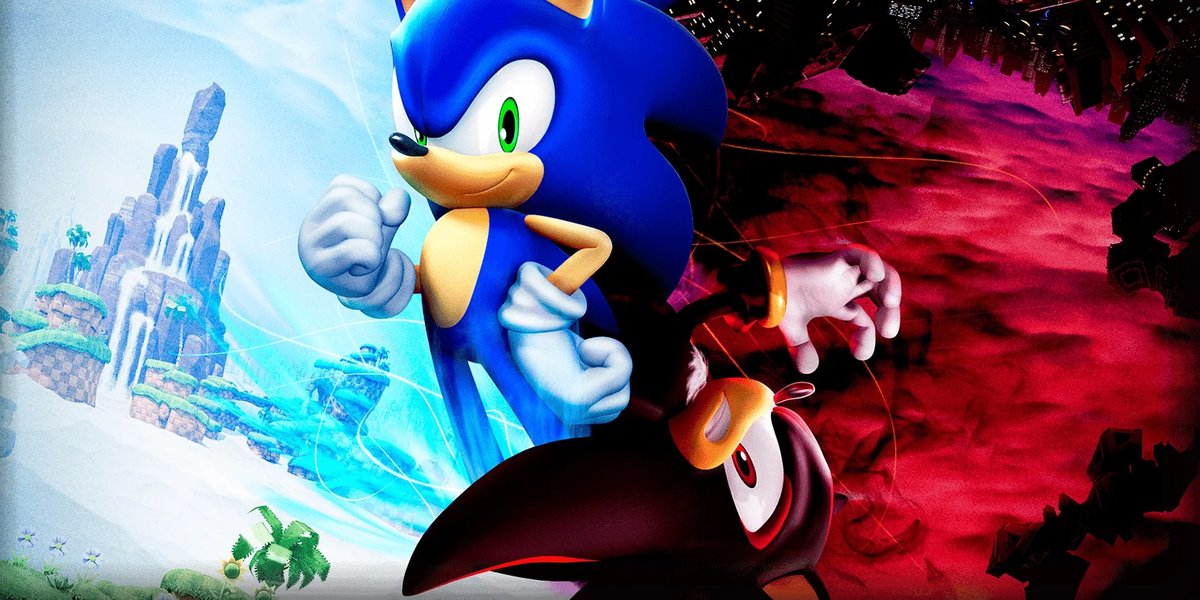
The upcoming game, Sonic X Shadow Generations, promises to be a pivotal moment in understanding the 'Evolution of Shadow Across Sonic Game Eras (Generations)'. This title is not just a remaster of the beloved Sonic Generations but an expanded experience featuring an entirely new campaign dedicated to Shadow.
This dedicated campaign allows players to delve deeper into Shadow's past, present, and possibly future, re-exploring his iconic moments and potentially uncovering new facets of his character. It’s an opportunity for both long-time fans and newcomers to witness his journey firsthand, reinforcing his status as a cornerstone of the Sonic universe. By juxtaposing his past incarnations with his modern self, the game is set to weave together the threads of his complex history into a cohesive narrative, celebrating his distinct impact on the franchise. This isn't just revisiting history; it's recontextualizing it, solidifying his role, and perhaps even charting a new course for the Ultimate Life Form. For everything you need to know about this exciting new chapter, check out The ultimate guide to sonic shadow generation.
Common Questions About the Ultimate Life Form
Navigating Shadow's complex history can raise a few questions. Here are some common ones:
Is Shadow good or evil?
Shadow typically operates in the moral grey area. While he initially sought revenge, his actions are now largely aligned with protecting the world, albeit with a blunt and often ruthless approach. He prioritizes results over pleasantries and will do what he deems necessary, even if it appears villainous to others. He's best described as an anti-hero who usually fights for the greater good.
Why is Shadow so serious all the time?
His seriousness stems from his tragic past. The loss of Maria and the betrayal by humanity (from his perspective) instilled in him a profound sense of duty and a pragmatic outlook. He doesn't have Sonic's carefree spirit because his origins are rooted in suffering and a heavy burden of responsibility.
Is Shadow an android or a clone?
No, Shadow is the original "Ultimate Life Form" created by Professor Gerald Robotnik. The idea that he might be an android or a clone was a plot point explored in Sonic Heroes and Shadow the Hedgehog to add to his identity crisis, but it was ultimately confirmed that he is the one and only original.
Does Shadow like Sonic?
While they often clash due to their opposing personalities and methods, there's a deep, unspoken mutual respect between them. They are rivals, but also allies who understand each other's power and resolve. Shadow acknowledges Sonic's strength and often comes to his aid, suggesting a form of reluctant camaraderie.
Embracing the Shadows: The Future of a Complex Icon
The 'Evolution of Shadow Across Sonic Game Eras (Generations)' is a testament to the power of compelling character design and narrative depth. He began as a mirror-image rival, laden with a tragic past and a thirst for vengeance. Through various game eras, he shed the weight of pure retribution, transitioning into a duty-bound agent of justice, and eventually, a stalwart (if stern) ally.
Shadow the Hedgehog isn't just a powerful character; he's a symbol of transformation, redemption, and the enduring complexity that can thrive even in a vibrant, fast-paced universe. His journey reminds us that heroism isn't always bright and cheerful; sometimes, it's forged in darkness, hardened by experience, and defined by an unwavering, solitary purpose. As the Sonic universe continues to expand and re-explore its rich history, Shadow's unique brand of cool and complexity ensures he will remain an integral, enigmatic, and endlessly fascinating figure for generations to come.